The Enduring Story of Amanita Muscaria
 Posted On
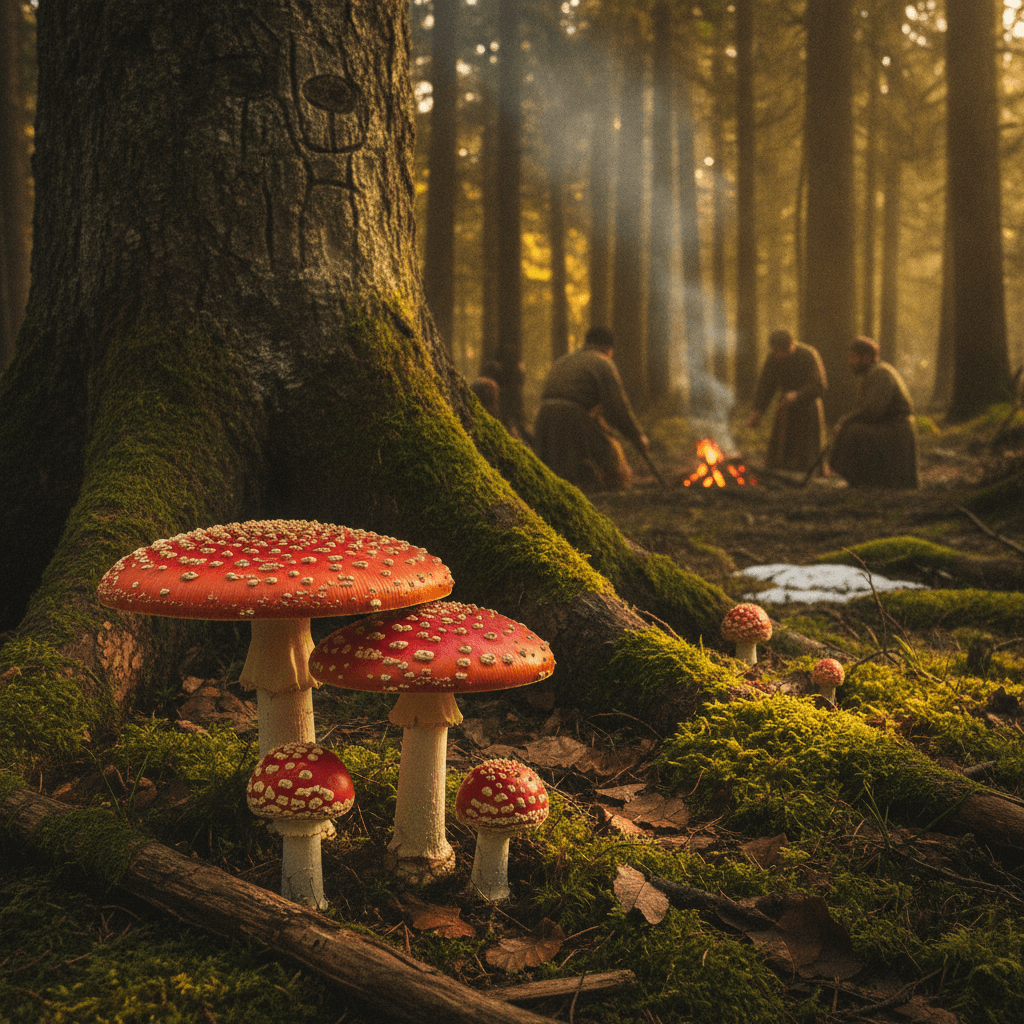
The world of fungi holds many secrets, and few are as captivating as Amanita muscaria, often called the fly agaric mushroom. I have always been fascinated by how certain natural elements carry such deep historical weight and cultural significance. This vibrant mushroom, with its distinctive red cap and white spots, is more than just a pretty sight in the forest.
Its story stretches back thousands of years, weaving through ancient traditions, folklore, and even modern scientific inquiry. For a long time, many people viewed this mushroom with fear or misunderstanding, seeing it only as a toxic novelty. But its true history reveals a much richer and more complex narrative.
I am excited to explore the enduring journey of this remarkable botanical, from its mystical past to its place in today’s world of research and renewed interest. Understanding its background helps us appreciate the careful way we should approach natural compounds.
Ancient Roots and Cultural Significance
The enduring story of Amanita muscaria begins deep in antiquity. Ancient cultures across the northern hemisphere, particularly in Siberia and other parts of Eurasia, revered this mushroom. It was not just a plant but often a central figure in spiritual practices and community rituals. Shamans and tribal elders used it in ceremonies to gain insights and connect with the spiritual world.
These practices show a profound respect and understanding of the mushroom’s properties. People carefully gathered and prepared it, often developing intricate methods to mitigate its more intense effects. The bright colors and distinctive appearance of the fly agaric made it easily recognizable, so it became a memorable symbol in many societies. It held a special place in their worldview, often appearing in art and oral traditions.
We see evidence of its importance in archaeological finds and historical texts. These sources paint a picture of a mushroom deeply integrated into the fabric of daily life and belief systems. It was a tool for spiritual exploration and a part of the natural pharmacy of the past.
Mythological Connections and Folklore
Beyond its practical use, Amanita muscaria permeated the mythology and folklore of many groups. In some Siberian traditions, the mushroom was seen as a bridge between worlds. Stories tell of reindeer, which are known to consume the mushroom, acting as spirit guides. I find these tales fascinating because they show how people interpreted the effects they experienced.
The mushroom’s image, with its striking red and white, also appears in various folk tales. Some theories even link it to the origins of modern Christmas traditions, suggesting the flying reindeer and red-and-white clad figures could be inspired by Siberian shamanic practices involving the fly agaric. These connections highlight how deeply embedded the mushroom became in cultural narratives over centuries.
Such folklore speaks to the mushroom’s undeniable impact on human imagination and spiritual development. People wove its potent nature into their understanding of the world around them. It became a powerful symbol.
The Chemistry of Amanita Muscaria
To truly appreciate the enduring story of Amanita muscaria, we must look at its chemistry. The primary active compounds in this mushroom are ibotenic acid and muscimol. These are not hallucinogens in the traditional sense, like psilocybin. Instead, they act on the GABA neurotransmitter system in the brain.
Ibotenic acid is a neurotoxin and also a powerful deliriant. When consumed, it can cause disorientation, nausea, and intense confusion. However, ibotenic acid is a precursor to muscimol. When the mushroom is dried or heated, ibotenic acid decarboxylates, meaning it converts into muscimol. Muscimol is the main psychoactive compound responsible for the mushroom’s effects. It is a GABA-A receptor agonist, leading to sedative, hypnotic, and dissociative experiences.
The concentration of these compounds can vary greatly between individual mushrooms and regions. This variability makes consuming wild-harvested Amanita muscaria unpredictable and potentially dangerous. I always emphasize the need for caution and scientific understanding when dealing with any powerful natural substance.
Processing and Traditional Preparation
Traditional preparation methods for Amanita muscaria were not random acts. They often involved specific drying or heating processes designed to maximize the conversion of ibotenic acid to muscimol. This transformation significantly reduced the unwanted toxic effects while enhancing the desired psychoactive properties. People understood this chemical change through generations of trial and error.
One common method was air-drying the mushrooms, sometimes near a fire, over several days or weeks. This patient process allowed for the gradual decarboxylation. Another method involved boiling the mushrooms, with the water being discarded multiple times to leach out water-soluble toxins. These careful steps show sophisticated indigenous knowledge of ethnobotany.
I find it remarkable how ancient cultures, without modern laboratory tools, figured out how to safely process such a complex botanical. Their methods were a form of practical chemistry. They optimized the experience while minimizing risks.
Modern Scientific Interest in Amanita Muscaria
The enduring story of Amanita muscaria continues today with a surge of modern scientific interest. Researchers are no longer just documenting its historical use. They are actively investigating its compounds for potential therapeutic applications. The unique way muscimol interacts with GABA receptors opens new avenues for understanding brain function and potential treatments for various conditions.
I am seeing more studies exploring muscimol’s potential in areas such as sleep disorders, anxiety, and even neurological conditions. The precision of modern biotechnology allows us to isolate these compounds and study their effects in controlled environments. This approach moves beyond traditional uses to uncover specific mechanisms and reproducible results. It is an exciting time for mycological research. You can read more about this topic in Miami Living Magazine, which highlights its historical legacy and its current resurgence.
We are learning to separate the folklore from the pharmacology, gaining a clearer picture of what this mushroom truly offers. This scientific scrutiny is crucial for safe and effective development of any potential therapies derived from natural sources.
Microdosing and Contemporary Discussions
There is a growing discussion around the practice of microdosing Amanita muscaria. People are experimenting with very small, sub-perceptual doses. The goal is to experience subtle benefits like improved mood, better sleep, or reduced anxiety without the intense psychoactive effects. This trend reflects a broader interest in natural compounds for well-being.
I recognize the curiosity behind microdosing, but I also stress that this area lacks robust clinical research. Much of the information comes from anecdotal reports. There are no standardized protocols for safe microdosing with this mushroom. This lack of scientific consensus means individuals must proceed with extreme caution and ideally with professional guidance.
The scientific community needs to conduct more controlled studies to understand the long-term effects and optimal dosages. We cannot rely solely on personal experiences when it comes to potent compounds. This is why our focus at Mockup Reactor emphasizes rigorous, evidence-based understanding in all aspects of biotechnology.
Responsible Exploration and Safety
Given the powerful nature of Amanita muscaria, responsible exploration and safety are paramount. I cannot overstate the risks associated with improper identification and consumption. Unlike some other psychoactive fungi, the effects can be highly unpredictable. They can range from mild euphoria to severe delirium, nausea, and convulsions.
Without proper preparation, the ibotenic acid content can cause significant discomfort and toxicity. This is not a mushroom to experiment with casually. Education is the first line of defense against adverse reactions. Knowing precisely what you are consuming and how it has been processed is essential.
I strongly advise against foraging and consuming this mushroom without expert knowledge. Many resources are available for learning about mycology. It is always best to consult those who deeply understand these complex organisms.
Identification and Misidentification Risks
Proper identification is a critical safety measure when dealing with wild mushrooms. Amanita muscaria has several look-alikes, some of which are deadly. Beginners can easily confuse it with other species, especially if they only focus on general characteristics like a red cap. The variation in appearance across different regions also adds to the challenge.
Factors like age, growing conditions, and exposure to rain can alter the mushroom’s appearance, making identification harder. For example, rain can wash away the distinctive white spots, making the mushroom look more like other toxic red-capped fungi. I always teach that mushroom identification requires meticulous attention to every detail. You need to check cap shape, gill attachment, stem characteristics, and spore print.
The consequences of misidentification are severe. This is why relying on multiple identification guides and, ideally, an experienced mycologist is always the safest approach. Never eat a mushroom you are not absolutely 100% sure about.
Cultivation and Sustainable Practices
Considering the growing interest in Amanita muscaria, discussions around its cultivation and sustainable harvesting are becoming more relevant. Unlike many culinary mushrooms, Amanita muscaria forms a mycorrhizal relationship with trees. This means it has a symbiotic connection with the roots of specific tree species like pine, birch, and spruce. This makes it extremely difficult to cultivate indoors or in controlled settings away from its natural habitat.
Due to this challenge, most available Amanita muscaria products come from wild harvesting. This raises important questions about environmental impact and sustainability. Over-harvesting could deplete natural populations and harm the ecosystems that depend on these fungi. I believe responsible sourcing is a key consideration for any natural product.
We should support ethical harvesting practices that ensure the long-term health of mushroom populations and their forest environments. This includes leaving plenty of mushrooms to spore and avoiding damage to the surrounding flora.
Environmental Role of Amanita Muscaria
Beyond its human uses, Amanita muscaria plays a vital role in forest ecosystems. As a mycorrhizal fungus, it helps trees absorb water and nutrients from the soil. In return, the trees provide the fungus with carbohydrates produced through photosynthesis. This mutualistic relationship is essential for the health and growth of many forest trees.
I see this as another layer of the mushroom’s complex identity. It is not just something for human consumption. It is an integral part of the natural world, contributing to forest biodiversity and resilience. Protecting these fungal networks is just as important as protecting the trees themselves. Our understanding of ecosystems grows deeper when we acknowledge these intricate connections.
Its ecological function highlights why sustainable practices are not just good for the mushroom but for the entire forest community. We must respect its place in nature.
The Continuing Legacy of Amanita Muscaria
The enduring story of Amanita muscaria is a testament to the powerful connection between humanity and the natural world. From its ancient spiritual uses to its current scientific scrutiny, this mushroom continues to intrigue and challenge us. I have learned so much about cultural history and modern biochemistry by studying this fascinating fungus. It shows how deeply certain botanicals have shaped human societies and beliefs over millennia.
As research advances, we are slowly peeling back the layers of its mystique, revealing a complex chemical profile with potential applications in modern medicine. But with this increased understanding comes an even greater responsibility. We must approach such potent natural compounds with respect, caution, and an unwavering commitment to safety and scientific rigor. The narrative of Amanita muscaria is far from over. I believe its future will be defined by careful research and sustainable practices. We must ensure that its long story continues in a way that benefits both people and the planet. Let us continue to learn and respect the intricate details of our natural world.