Create a Safe and Accessible Kitchen for Seniors
 Posted On
Designing a kitchen for older adults calls for a practical approach that puts safety first while keeping daily life comfortable and enjoyable. Many families face small challenges that stack up into major risks. A few thoughtful changes can cut the chance of slips, burns, and other common accidents while making mealtimes less stressful and more pleasant.
This article walks through specific, realistic changes that make a real difference. You will find layout ideas, lighting tips, storage fixes, appliance suggestions, and steps for emergency readiness. Examples and quick tips are included so you can start with small projects and expand from there.
Why making the kitchen safe and accessible matters for seniors
Kitchens are where people spend a lot of time preparing food socializing and cleaning. For older adults that time can come with higher risk. Falls account for a large share of injury related emergency visits for people over 65. Heat exposure and burns from stoves and hot liquids are common sources of injury. The right planning reduces those risks and helps older adults keep independence.
Beyond safety there are daily benefits. A kitchen that is easier to use reduces fatigue and frustration. Tasks that used to require help can be done solo. That preserves dignity and can lower ongoing caregiving stress for family members.
Layout and reachability changes that make a big impact
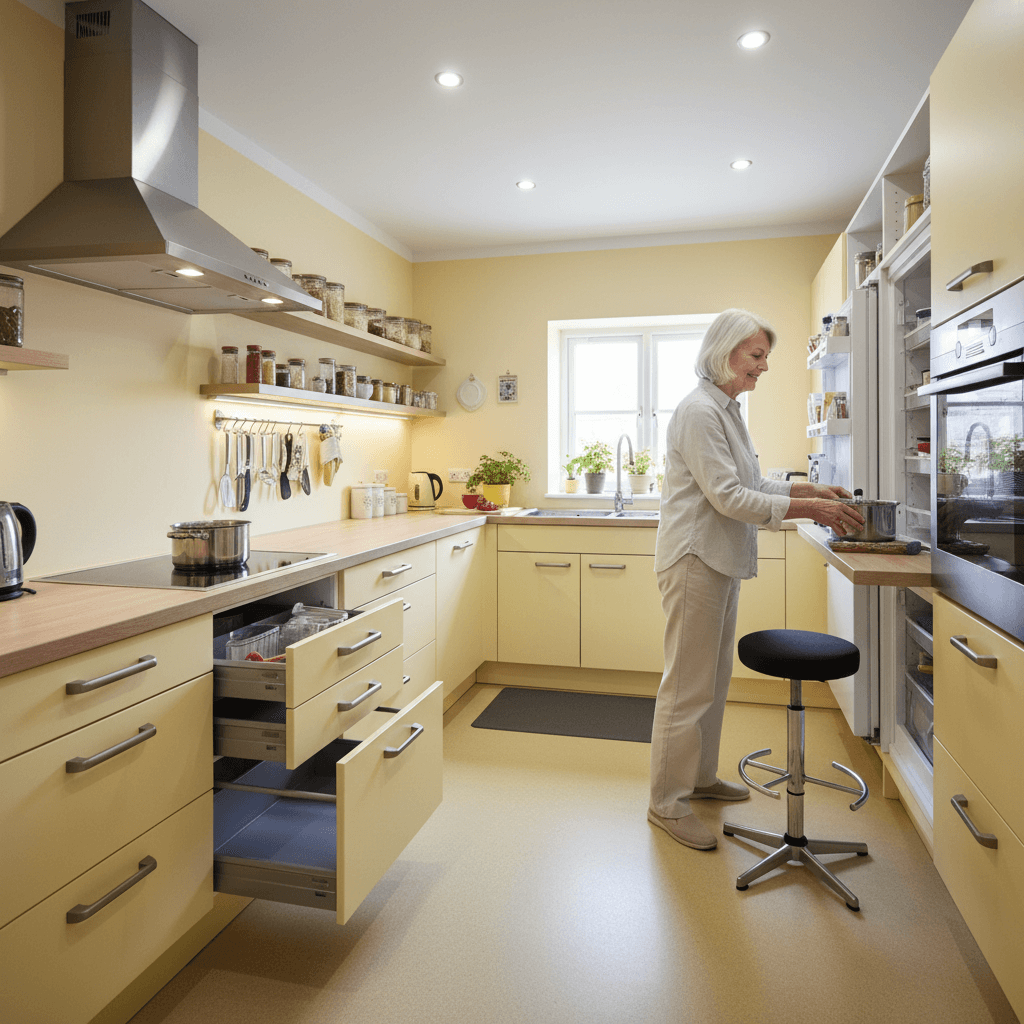
Small layout updates can change a kitchen from awkward to practical. Start with work zones that place frequently used items within easy reach. Move everyday dishes and cookware to waist to shoulder height. Store heavy pots in lower drawers with glide tracks instead of deep shelves that require bending.
- Keep the stove the primary work area and place prep space nearby so carrying hot pans across the room is not needed
- Leave clear floor paths that allow a walker or wheelchair to move through without obstacles
- Place electrical outlets near counters so small appliances can be used without stretching cords across gaps
Work triangle adjusted for safety
The classic work triangle remains useful. Reduce the distance between sink stove and refrigerator to limit walking. If space is tight consider moving the microwave to a lower built in area so it is not lifted over a stove. Simple changes like this reduce the chance of spills and drops.
Appliance placement examples
Install the oven with side opening doors or select single drawer style ovens so older adults do not have to reach into a high cavity. Place frequently used items such as spices and oils at countertop level. Consider installing pull out shelves that bring entire storage areas forward for easier access.
Lighting and visibility that cut error and strain
Good lighting reduces mistakes and eye strain. Use layered lighting to create even coverage across the kitchen. Overhead fixtures provide general light. Add task lighting under cabinets to illuminate counters and chopping surfaces. Night lights along floor level help with late night trips to the kitchen.
- Choose bulbs with high color rendering so food color and texture are easier to judge
- Install dimmer switches to set comfortable brightness levels for different tasks
- Reduce glare by angling fixtures away from reflective surfaces
Contrast is also important. Use contrasting tones between countertops and cabinets to make edges more visible. Mark frequently used controls with bright tape or large printed labels to reduce confusion.
Flooring and fall prevention tactics
Flooring should be stable level and slip resistant. Avoid highly polished tiles that become slick when wet. Consider textured vinyl or low pile commercial grade carpet in dining adjacent areas. Keep thresholds flush and repair any uneven transitions between rooms.
- Choose rugs with non slip backing and secure edges with tape or double sided strips
- Keep pathways clear of clutter and cords
- Place a dedicated mat in front of the sink that drains quickly and has a firm surface
Practice a quick walk through to identify trip points. Look for cabinet doors that stay open and consider magnetic catches that keep doors closed when not in use. Small repairs like tightened cabinet hinges and level flooring reduce the chance of a fall.
Safer appliances and kitchen tools
Pick appliances with simple easy to read controls and visible indicator lights. Induction cooktops are a good option for older adults because they heat the pan rather than the top surface so burn risk is lower. Choose stoves with front controls to prevent reaching over hot burners.
- Use kettles that shut off automatically when water boils
- Choose a microwave that allows food to be reheated at a lower power setting and has a single step for start
- Select a refrigerator with pull out shelves and wide openings
Faucet and sink choices that save effort
Lever style faucet handles are easier to operate than knobs for hands with limited grip. A single lever that moves up and down and side to side makes temperature control easier. Install a pull out sprayer that docks cleanly when not in use. For wheelchair users leave knee space under the sink and route plumbing to prevent sharp edges.
Storage and organization for reach and grip
Think about how items are used and store them accordingly. Keep the daily cup or plate within one or two steps of where food is prepared. Heavy items should be stored at waist height on pull out drawers so they do not need to be lifted or balanced on shelving.
- Install pull down shelving in upper cabinets for easier reach
- Use clear labeled containers for pantry items and place labels at eye level
- Group items by task such as baking breakfast and dinner to reduce searching
Organizational tweaks help with grip limitations. Use easy open lids with wide tabs and non slip jar openers near the spice rack. Replace tiny knobs with larger handles that are easier to grasp. If fine motor skills are diminished favor push button style corks and dispensers.
Emergency readiness and safety routines
Planning ahead lowers the chance that a small accident becomes serious. Install smoke and carbon monoxide detectors near the kitchen and check batteries every six months. Keep a simple fire extinguisher within reach and teach a short procedure for safe use. Place a list of emergency phone numbers on the fridge and set up a charging station so phones stay powered.
Consider automatic shut off devices for ranges that turn cooking appliances off after a set time or when left unattended. Place a sturdy step stool with a long handle in a fixed location for reaching high items yet avoid using unstable chairs. Practice a short evacuation plan so everyone knows the quickest exit path from the kitchen.
For a plain language checklist covering the main changes and product suggestions take a look at this resource on safe kitchen design for seniors which highlights practical modifications and safety gear that many families find useful.
Finishing touches that support dignity and comfort
Small details improve daily life and help maintain independence. Comfortable seating near the prep area gives a break during longer tasks. A magnetic knife strip keeps sharp tools out of drawers while remaining accessible. Place frequently used recipe holders or tablets on stands that do not take up counter space.
Temperature labels on faucet handles and oven knobs reduce guessing. Non slip handle covers on mugs and pans help maintain a secure grip. Keep a bowl of prepped ingredients at countertop level to cut down on reaching and bending while cooking.
Conclusion
Creating a kitchen that is safe and accessible for seniors requires thoughtful but realistic steps. Focus on the most frequent risks first such as slips falls burns and reach related strain. Start with lighting and flooring upgrades then move to storage and appliance adjustments. Small investments like pull out drawers lever handles and clear labeling often deliver the largest day to day benefits.
Planning ahead will also make future modifications easier. Keep a running list of what works and what still causes trouble. Involve the person who uses the kitchen in decisions. Their preferences and routines will point toward the most useful changes. If you need a concise checklist or product ideas a linked resource above offers focused recommendations for common layouts and needs.
Take action now by choosing one area to improve this month. Replace a rug that trips and add under cabinet lighting or swap a knob for a lever handle. These steps are easy to complete and can make a measurable difference in safety and comfort. If you are working with a professional consider bringing photographs of the kitchen and a note of daily routines. That information helps plan changes that match real life. A safer kitchen supports independence and enjoyment of meals for years to come.